
Caffeine for gaming: how much, when, and the sleep trade-off
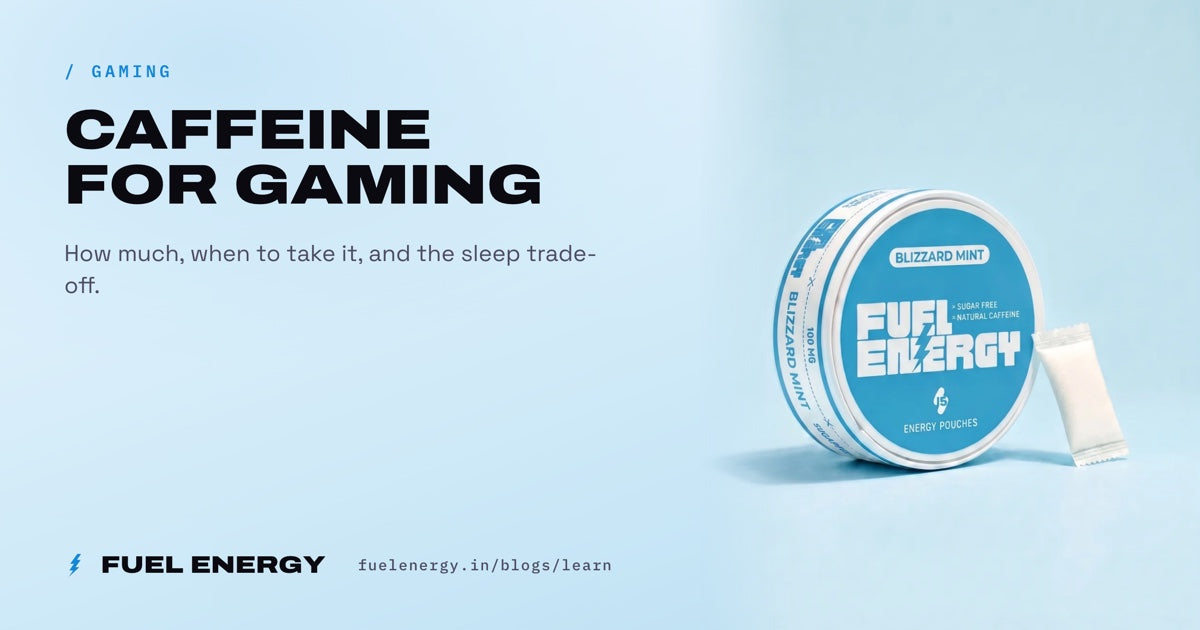
For a gaming session, about 100 mg of caffeine taken shortly before you start is a sensible dose for most adults: a caffeine pouch about 10 minutes before, a coffee 30–60 minutes before. Studies on first-person-shooter players used 1–3 mg per kg of body weight (roughly 70–210 mg for a 70 kg adult) and saw faster reaction times and better accuracy. Stop at least 8–9 hours before you plan to sleep, or the next session pays for this one.
Here's what the research on caffeine and esports actually found, how to time it for a long night, and what to skip.
What the research says about caffeine and gaming
Esports research is young, but the early studies point the same way.
- In a 2024 dose-response trial, 24 first-person-shooter players took water, 1 mg/kg or 3 mg/kg of caffeine before aim and reaction tests. Both doses improved clicking accuracy, hit rate, tracking accuracy and reaction time compared with water. The 3 mg/kg dose gave the broadest gains.
- A 2024 crossover trial with nine elite players found that 3 mg/kg raised their kill ratio and hit accuracy and shortened the time to target, compared with a placebo.
Two honest caveats. These are small studies in lab conditions, mostly with shooters, so they say more about aim and reaction time than about strategy games. And caffeine sharpens the player you already are; it doesn't replace sleep, practice or a decent setup.
How much caffeine for a gaming session?
Start low. 1 mg/kg already beat water in the 2024 trial, and for most adults that's 50–80 mg. A 100 mg pouch or a strong coffee sits a little above that, which is plenty for one session. There's no prize for going higher: bigger doses mostly add jitters, a racing heart and worse sleep.
Count everything you have that day, chai and coffee included. Health authorities such as Europe's food safety agency, EFSA, put the safe daily ceiling for healthy adults at about 400 mg, with single doses up to about 200 mg.
Timing it right
| Format | Typical caffeine | Take it | At the desk |
|---|---|---|---|
| Caffeine pouch | 100 mg (FUEL) | About 10 min before you queue | Hands-free, nothing to spill; out after about 25 minutes |
| Black coffee | 80–120 mg in a strong cup | 30–60 min before | A mug next to the keyboard |
| Energy drink, 250 ml | Up to 75 mg in India | 30–45 min before | About 25–30 g of sugar in a regular can |
| Caffeine gum | 40 mg a piece (NeuroGum India) | About 10 min before | Chewing for the whole session |
A pouch works through the lining of your mouth, so it starts in about 5–10 minutes rather than waiting for your stomach. That makes it easy to time: put one in while the match loads.
Long sessions: should you top up?
Caffeine's half-life in adults is about five hours, so half of a 100 mg dose is still in you five hours later. For a marathon session:
- Take your first dose as you start.
- If you top up, wait 3–4 hours and keep the second dose small.
- Never top up within 8–9 hours of when you mean to sleep (more below).
- Drink water as you go and stand up between games. Caffeine doesn't fix stiff wrists or dry eyes.
Late-night ranked: the sleep trade-off
This is the part most gaming guides skip. A 2023 review of 24 studies in Sleep Medicine Reviews found that caffeine cut total sleep by about 45 minutes on average. To avoid that, a coffee-sized dose (about 107 mg) needed to be taken at least 8.8 hours before bed. An older study gave 400 mg six hours before bedtime and measured more than an hour of lost sleep, which the volunteers didn't notice.
So if you're playing until 1 am, your last 100 mg should be around 4 pm. Every bedtime is in the table in when to stop caffeine before bed. For a session that starts at 10 pm, skip caffeine and lean on a nap earlier in the day. Reaction time drops after a short night far more than caffeine can win back.
What to skip
- Stacking: an energy drink plus a coffee plus a pre-workout is how people end up at 400 mg by dinner. Pick one source per session.
- Sugar on the desk: a regular 250 ml can carries about 25–30 g of sugar. Sticky keys are the least of it.
- Caffeine for under-18s: if you're under 18, skip caffeine products like these. FUEL is sold to adults only.
- Anything with nicotine: some pouch brands sell caffeine and nicotine pouches in near-identical tins. Check the front of the tin says nicotine-free.
Where FUEL fits
FUEL is a caffeine pouch: 100 mg of caffeine from green coffee beans, 0 g sugar, no nicotine and no tobacco, 15 pouches to a flat tin. Gamers mostly pick Blizzard Mint. A tin is ₹349 and any three are ₹900, with cash on delivery. New to pouches? Start with how to use a caffeine pouch.
Quick answers
Does caffeine make you better at games?
In small lab studies with shooter players, caffeine at 1–3 mg/kg improved reaction time, accuracy and target tracking compared with water or a placebo. It sharpens what you already have; it won't replace practice or sleep.
How much caffeine before gaming?
For most adults about 100 mg is plenty, roughly one strong coffee or one caffeine pouch. Stay under about 200 mg in one go and 400 mg across the day.
Is an energy drink or a caffeine pouch better for gaming?
Both deliver caffeine. A 250 ml energy drink in India carries up to about 75 mg plus 25–30 g of sugar in the regular versions. A FUEL pouch is 100 mg with no sugar and nothing to spill, and you feel it in about 5–10 minutes.
When should I stop caffeine before sleeping?
About 9 hours before bed for a coffee-sized dose, based on a 2023 review of 24 studies. Bigger doses need longer. See when to stop caffeine before bed.
Can I use caffeine pouches while streaming?
Yes. A pouch sits under your upper lip and doesn't affect your speech much once it's settled. Take it out after about 25 minutes and bin it; it doesn't dissolve.