
Energy drink alternatives in India (zero sugar)
The simplest zero-sugar swaps for an energy drink in India are black coffee, a sugar-free can, unsweetened chai or green tea, and a caffeine pouch. All of them skip the roughly 25–30 g of sugar in a regular can, and coffee, a sugar-free can and a pouch also match its caffeine, which Indian rules cap at 75 mg per 250 ml.
Which one suits you depends on where you'll be when you need it. Here are seven options with their caffeine, sugar and cost, and an honest note on each.
Why swap at all?
It's rarely the caffeine. FSSAI caps caffeinated beverages at 300 mg of caffeine per litre, so a 250 ml can sold in India carries 75 mg at most, less than a strong filter coffee. What a regular can adds is sugar: about 25–30 g. The World Health Organization suggests keeping free sugars under 10% of your daily energy and ideally under 5%, which is about 25 g. One can uses up that whole ideal amount.
People often blame the caffeine for the energy-drink crash, but a big dose of sugar rising and falling in your blood is often part of it.
Seven alternatives compared
| Option | Caffeine | Sugar | Rough cost | Good for |
|---|---|---|---|---|
| Black coffee (filter or instant) | 50–120 mg a cup | 0 g | A few rupees at home; ₹150+ at a café | Mornings, the desk |
| Sugar-free energy drink, 250 ml | Up to 75 mg | 0 g | About the same as a regular can | When you want it cold and fizzy |
| Chai with little or no sugar | 30–50 mg a cup | Your call | ₹10–₹20 a cup | A gentle lift |
| Green tea | 25–35 mg a cup | 0 g | A few rupees | Low doses through the day |
| Caffeine pouch | 100 mg (FUEL) | 0 g | ₹17.8–₹23.3 a pouch | Gym, driving, gaming, exams |
| Caffeine gum or mints | 40–60 mg a piece | Sugar-free | ₹28–₹52 per 100 mg | Small top-ups |
| No caffeine: water, a walk, a short nap | 0 mg | 0 g | Free | When you're thirsty or just tired |
Brewed drinks vary a lot with strength and serving size, so take their numbers as ballparks. Our caffeine chart for chai, coffee and energy drinks has the details.
Each option, honestly
Black coffee
About the cheapest caffeine you can get if you make it at home, and zero sugar if you drink it black. The catches: it takes 30–45 minutes to kick in, you need a cup, and café versions, cold coffee especially, often come sweetened. Two spoons of sugar in a mug adds about 8 g.
Sugar-free energy drinks
These fix the sugar problem and keep the cold, fizzy taste, which is the part some people actually want. You still have a can to carry, and the caffeine is the same as a regular can, capped at 75 mg per 250 ml. Read the label: "less sugar" and "sugar-free" are not the same thing.
Chai and green tea
A lower, gentler dose. Chai sits around 30–50 mg a cup and green tea around 25–35 mg. They suit an all-day habit better than a big pre-workout lift. Watch the sugar in chai: it adds up fast over three or four cups.
A caffeine pouch
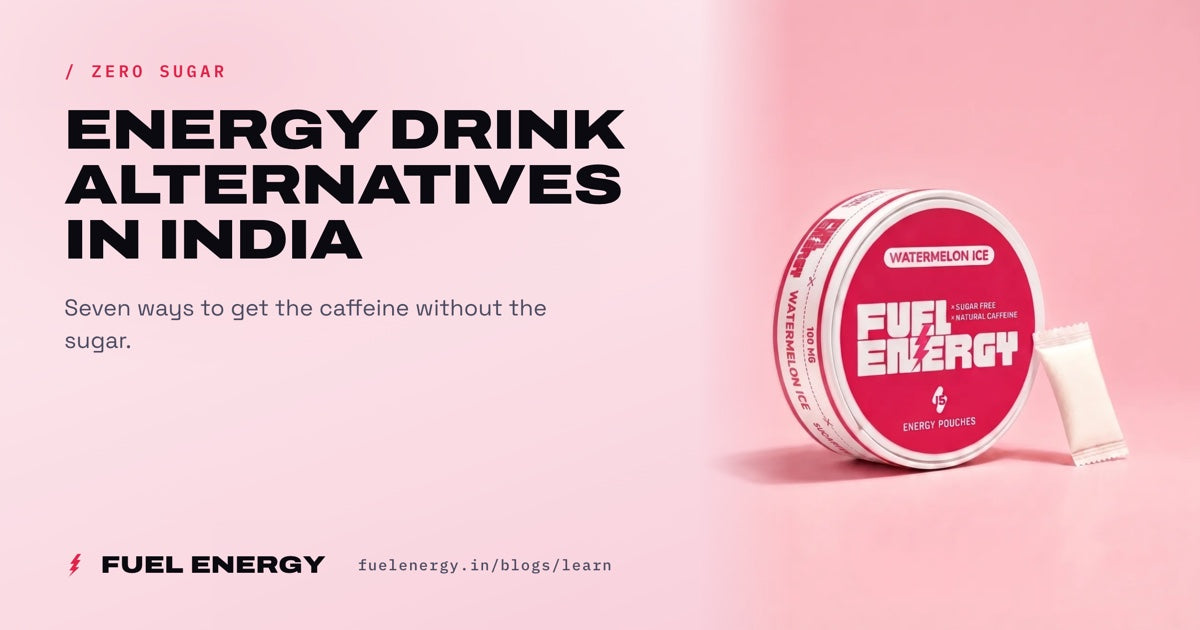
A caffeine pouch isn't a drink. It's a small pouch you tuck between your upper lip and gum. A FUEL pouch carries 100 mg of caffeine from green coffee beans, with 0 g sugar and 0 kcal, and you feel it in 5–10 minutes. There's nothing to hold or spill, which is why it suits the gym, a long drive or a gaming session.
The trade-offs: it gives you no fluid, it doesn't taste like a drink, and the feel under the lip takes a try or two to get used to. It's for adults 18 and over. Start with Watermelon Ice if you like your energy drinks fruity, or Café Mocha if you'd rather it tasted of coffee.
Caffeine gum and mints
Smaller doses, usually 40–60 mg a piece, and you chew or dissolve them. They cost more per 100 mg of caffeine than a pouch, but suit people who want small top-ups. See caffeine pouch vs caffeine gum for the full comparison.
No caffeine at all
If you're reaching for a can at 4pm every day, the real fix may be water, lunch or sleep. Mild dehydration can feel a lot like tiredness, and a 10–20 minute nap or a short walk in daylight is worth trying before another 75 mg.
How to choose by moment
- Before the gym: a pouch about 10 minutes before, or black coffee 30–60 minutes before. Our guide on timing caffeine before a workout covers the dose.
- A long drive: a pouch. Nothing to spill, nothing to hold.
- Exam night: a pouch or chai by late afternoon, and nothing after. Here's when to stop caffeine before bed.
- The 3pm desk slump: coffee if you can step away, a pouch if you can't.
- With friends, for the taste: a sugar-free can.
All three FUEL flavours are 100 mg, 15 pouches to a tin, ₹349. See the range, or compare the formats in caffeine pouches vs coffee vs energy drinks.
Quick answers
What can I have instead of an energy drink?
Black coffee, unsweetened chai or green tea, or a sugar-free can. If you don't want a drink at all, a caffeine pouch gives you 100 mg with no sugar and no can or cup to carry.
Are zero-sugar energy drinks a good alternative?
They remove the sugar, which is the main problem with a regular can. The caffeine is the same, capped at 75 mg per 250 ml in India. Keep your day's total under about 400 mg.
How much caffeine is in an energy drink in India?
At most 300 mg per litre under FSSAI rules: up to 75 mg in a 250 ml can and up to 105 mg in a 350 ml can.
Is a caffeine pouch an energy drink?
No. It's a pouch that sits under your upper lip, not a drink: 100 mg of caffeine, 0 g sugar, 0 kcal, and no liquid at all.
Do caffeine pouches contain sugar?
FUEL pouches contain 0 g sugar and 0 kcal. Xylitol is on the ingredient list in place of sugar.