
How to stay awake while studying (without wrecking tomorrow)
It is 1am, there are two chapters left, and your eyes are reading the same line for the third time. Here is what actually keeps you alert at a desk, what only feels like it does, and when the smartest move is to sleep.
The short answer
Alertness comes from four levers: light, movement, well-timed caffeine and sleep. The first three buy you a few good hours. None of them repays sleep debt; they only hide it for a while.
1. Fix the room first
- Bright, white light. A dim yellow lamp tells your body it is bedtime. Light the whole desk.
- Desk, not bed. Studying in bed trains your brain to fall asleep on your notes.
- Keep it cool. A warm, stuffy room makes you drowsy fast. Open a window or turn the fan up.
2. Work in blocks, not marathons
Study in 25 to 50 minute blocks, then stand up for five. Walk, stretch, refill your water. Put the hardest topic in the first block of the night, while you still have the most in the tank, and save revision and flashcards for later.
3. Time your caffeine
Caffeine works best taken before the slump, not in the middle of it.
- Know your onset. A coffee or chai takes about 45 to 60 minutes to properly land. A caffeine pouch absorbs through the gum and is felt in about 5 to 10 minutes.
- Set a cut-off. Caffeine has a half-life of around five hours. Stop about nine hours before you plan to sleep: a 2023 review of 24 studies found a coffee-sized dose needs about that long to stop cutting into sleep. More in when to stop caffeine before bed.
- Don't stack. One dose, then wait. Three coffees in an hour does not focus you three times as hard; it makes you jittery. Stay under about 400 mg for the whole day.
4. Skip the sugar spike
Sweet chai, biscuits and energy drinks give you a lift and then a drop about an hour later, right when you need to keep going. Snack on nuts, fruit, makhana or curd instead, and keep a bottle of water on the desk.
5. Use a 20-minute nap
When your eyes are closing, a 15 to 20 minute nap beats another coffee. Set an alarm. Longer than 30 minutes and you wake up groggier than before.
6. Know when to stop
Sleep is when your brain files away what you studied. If the exam is tomorrow, five or six hours of sleep will usually serve you better than cramming until 5am and walking in foggy. The all-nighter feels productive. The morning after usually is not.
Where FUEL fits
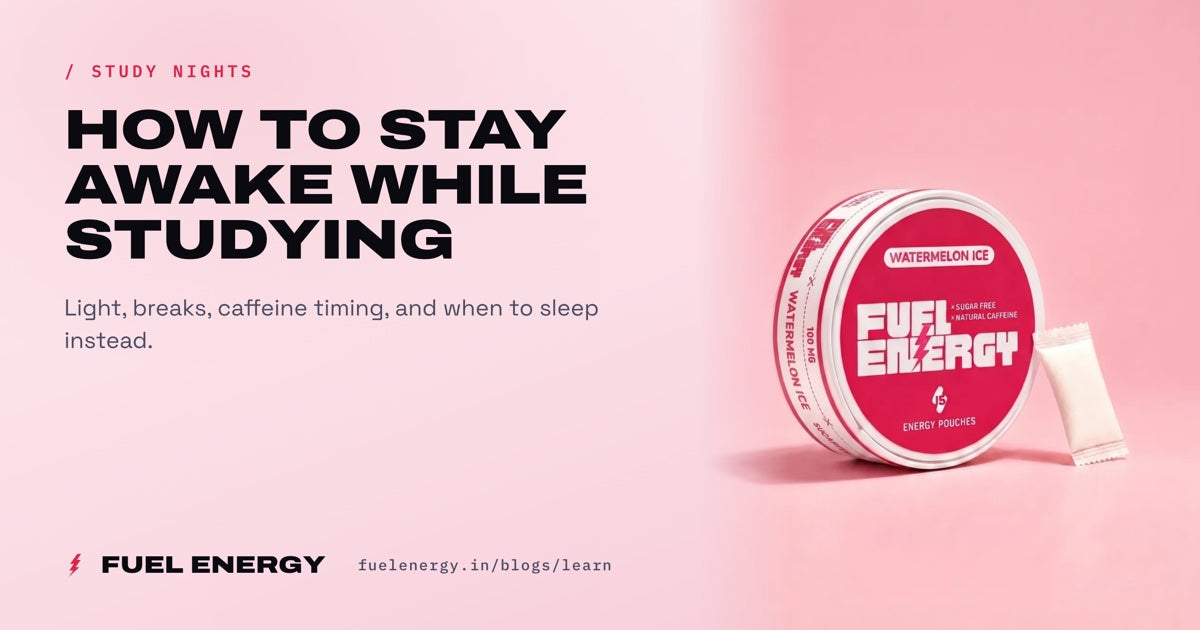
FUEL is built for exactly one of these levers: a precise 100 mg of caffeine, no cup, no sugar, felt in 5 to 10 minutes. One pouch at the start of a late block, not three back to back. It is for adults 18 and over. If you are younger, skip caffeine products entirely; everything else on this list works on its own.
First time? Read how to use a caffeine pouch, or go straight to Watermelon Ice, our late-night study favourite.
Quick answers
When should I take caffeine before studying?
About 45 minutes before a study block if it is coffee or chai, or 5 to 10 minutes before if it is a caffeine pouch, so it lands as you start.
How late can I have caffeine and still sleep?
Aim to stop about nine hours before bed for a coffee-sized dose. With a 1am bedtime, that means nothing after about 4pm. The full bedtime table is in when to stop caffeine before bed.
Is it better to sleep or pull an all-nighter before an exam?
Sleep, in almost every case. Even a few hours helps you recall what you studied. Use the night for a focused review, not new chapters.